Nikon Zf - A Camera With Soul
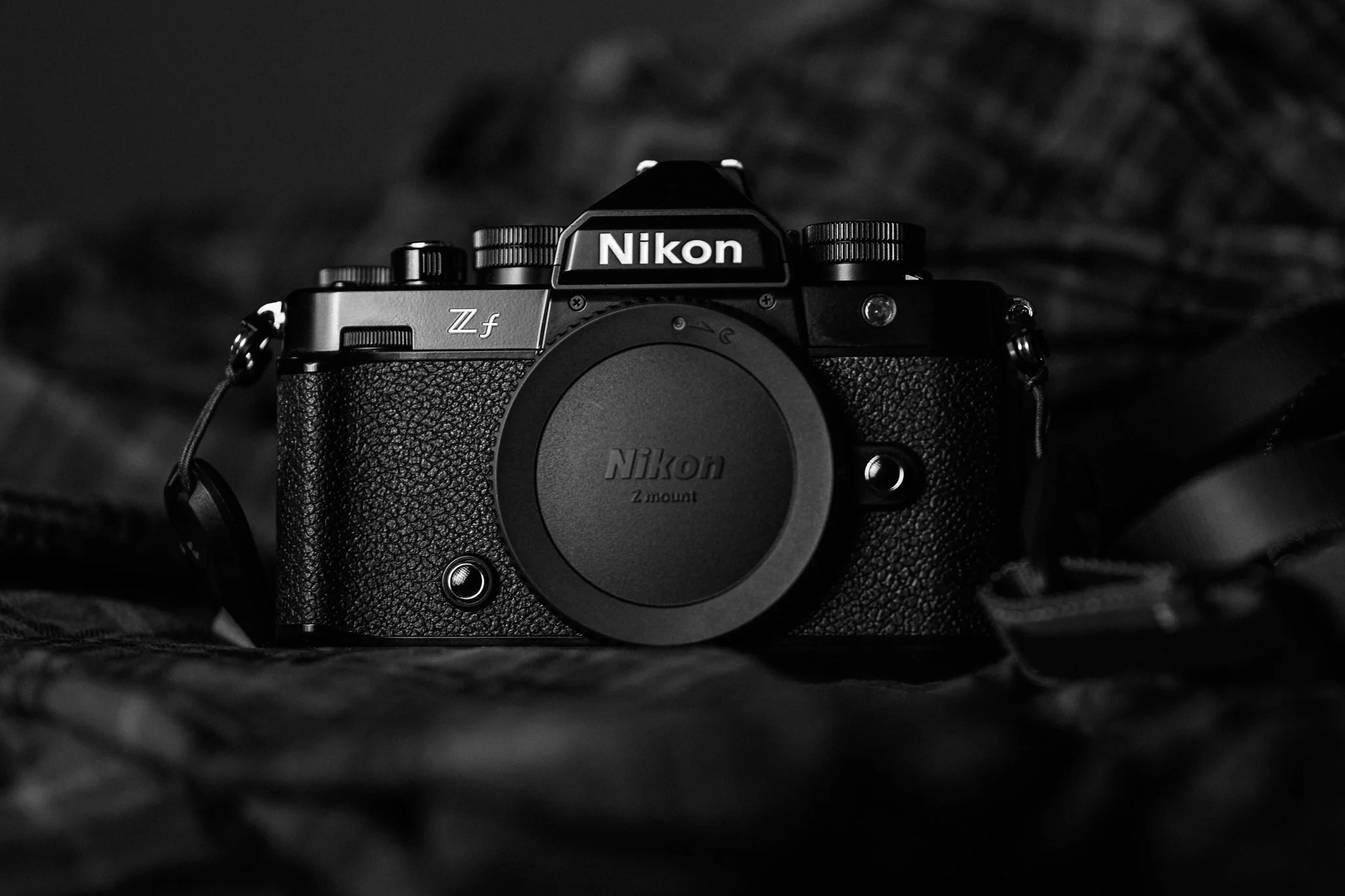
Nikon Zf
There is just something about brass dials and soul, and the Nikon Zf delivers on both.
When I started my photography journey in college I bought a Nikon D3000. I had taken photos before with a digital point and shoot and before that film point and shoot cameras, but this was my first dslr. The reason I purchased the camera was for a photography class that I signed up for, which required a camera with manual controls and ideally interchangeable lens. Down the road I upgraded to an another micro four thirds Nikon and eventually a D600. By this point I had shot a couple of weddings, portrait shoots, and sold some photos for commercial use. Somewhere around this time I ended up buying a FujiFilm x100s. I loved that camera, but it lacked in a lot of areas that didn’t make it a great option for professional use (like its lack of interchangeable lens for one).
Time went on and I found myself working a day job more than I was doing photography. I had bought a house and found myself working so much overtime that I didn’t feel I had the energy or time to spend on photography beyond for my own enjoyment. I remember turning down work and realizing that I probably didn’t need my Nikon D600 and a bunch of the other gear that I had accrued over the years, and so I sold it. I still had my FujiFilm x100s, but it wasn’t long before I missed having a more substantial camera. I purchased a FujiFilm xt3. It was a great little camera and the glass was very sharp and affordable compared to some other brands out there at the time. I used this camera as my primary camera for a few years and I enjoyed it. I love the physical dials that FujiFilm uses and the general form factor of the camera. Though I thought it was a good camera, I did feel like there was something missing. The xt3 has an APS-C sensor and while it’s a completely capable camera, I felt like I was missing the look that I got with shooting a Full Frame camera like my D600 had. There were a few other little things that I missed about Nikon as well. FujiFilm does a great job with their colors, but I always felt like Adobe Lightroom had issues with processing the files for some reason. There was another issue with the Bokeh that I noticed. Instead of being a nice smooth blur there was what I’ve seen online described as a worm effect to the Bokeh.
A few years ago I decided to go back to a Nikon when I saw the Nikon Zf. It had the similar form factor that I liked form the FujiFilm cameras, but it was full frame with the Nikon quality that I had missed. I had read a lot of negative reviews of the first iterations of the Nikon mirrorless cameras so I was a little worried, but once I got my hands on the Zf and started using it, all those worries went away. I’ve now been using the Nikon Zf for Portraits, Weddings, Commercial work, Landscapes, Live Music, Documentary Work, Realty Photography, everything. Maybe it’s because of the way that I learned photography to shoot manual from film photographers, but there’s something satisfying about using the Nikon Zf. I have since purchased a Nikon Z8 as well and that camera is also great, but there is still something special about the Nikon Zf that the Z8 doesn’t replace for me. It’s hard to argue that a camera like the Z8 doesn’t lend itself more to professional use in the majority of scenarios, but the Zf is definitely a capable camera. I don’t see myself ever parting ways with the Zf. It feels a bit like my FujiFilm x100s that I’ve kept for over a decade. There’s something about it that feels right and makes you want to pick it up and use it.
When I really started my photography journey over 15 years ago it felt like there were quite a few people getting into it, but not everyone stayed with it or put the effort into really learning how to take a photograph or even hold a camera. Sometimes I feel like I’m the last of an era that learned to use a camera shooting through the viewfinder. To me it just makes the most sense 90% of the time. Unless I’m shooting a landscape from a tripod or at a strange angle that is easier to use the screen, I’m shooting from the viewfinder no questions asked. That’s actually one reason I really like using the Zf. With the Zf I can turn the screen around and not even be bothered to look at it unless I want to check a shot to make sure I got what I was going for before moving onto the next thing. It’s kind of funny actually, one of the biggest things that seasoned photographers would complain about with people just learning on DSLRs and digital point and shoots, was that people would constantly “chimp”(look at the back of the screen to look at the photo after every shot). Today, whether because people first learned to shoot from a cell phone always looking at the screen, or just a matter of preference, the majority of people seem to shoot from the back of the screen entirely. I can understand this in certain situations for sure, but for me it still doesn’t make as much sense as using the viewfinder. I kind of chalk it up to the times I guess. If I had started photography today maybe I would be using the back screen rather than the viewfinder, but I don’t know. Camera’s are ultimately tools and how you decide to use it is up to you.